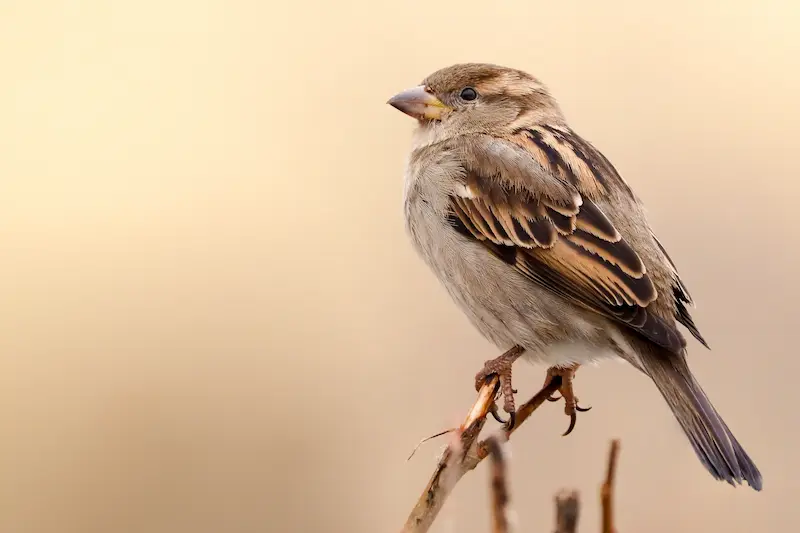
Are you familiar with the pest bird known as the sparrow? It is a tiny bird with pale feathers on its belly and tan, dark brown, and white feathers on its head and wings. The beak coloring of sparrows can range from black to yellow and has a conical shape.
But are sparrows pests? Yes, sparrows can be pests when they gather in large numbers. These small birds might look cute, but they can cause big problems for homes and businesses.
If you’re seeing these birds on your property, there are a few things you should know (including how to get rid of sparrows safely and effectively).
12 Ways Sparrows Cause Problems For Homes & Businesses
- The nests created by sparrows can be unsightly and expensive to remove over time.
- When sparrows nest in gutters, it can cause those gutters to overflow and create moisture problems near building foundations. Moisture problems can invite a wide range of pests and also lead to wood rot.
- When sparrows nest in machinery and electrical boxes, it can lead to a fire or a malfunction of that machinery.
- When sparrows nest in drainage pipes, it can cause those pipes to back up and create flooding inside a structure.
- Droppings left by sparrows can cause illness for employees and customers. Histoplasmosis, Salmonella, encephalitis, and meningitis are just a few of the diseases connected to sparrow droppings.
- Droppings from sparrows are corrosive. These birds don’t urinate. They release uric acid in their feces. This acid can eat away at many building materials, including concrete.
- Droppings from sparrows require cleanup, and cleanup will cost you money in maintenance. This can come in the form of cleaning walkways, structures, and landscape, as well as the cleanup of nesting sites, which can be hazardous to employees.
- When birds perch on wires, their droppings can fall on employees and customers below.
- Droppings are a particular threat to any business that has outside food services for customers.
- Sparrows often bring unwanted noises with them, especially if there is a large flock.
- Sparrows eat grass seed. This can cause problems for anyone handling your landscaping.
- Sparrows were introduced to the United States to help control agricultural pests, but have become a significant crop pest themselves.
Fortunately, the list of ways to effectively control sparrows is shorter.
How do you get rid of house sparrows?
Getting rid of sparrows takes special knowledge and the right tools. Which is why bringing in professionals is the best way to get rid of house sparrows and other sparrow species.
At Action Pest Control, we follow this process:
- First, we find where they nest and roost.
- Then we use safe methods to keep them away. We might install special nets to block them from buildings. We can put up spike strips where they like to sit. Sometimes we use special sounds that sparrows don’t like.
- We also help you remove things that attract sparrows, like open food sources or water.
- Our team knows all the local regulations surrounding bird control, so we do the job safely and legally. We make sure sparrows find somewhere else to live: away from your property!
Sparrow Varieties in Indiana, Illinois, and Kentucky
The house sparrow is the most common pest bird. Males have gray heads with white cheeks and a black bib on their chest. Females are plain brown and gray. The English sparrow is actually the same bird, just a different name. These birds came from Europe long ago and now live all over America.
Both types love to live near people because they can find food and shelter easily. You might see them at gas stations, grocery stores, barns, and houses.
Are Sparrow Nests Dangerous?
The short answer is yes, they can be. In addition to structural damage, sparrow nests harbor parasites like mites, fleas, and ticks. On top of that, nests built in vents and chimneys can block airflow, possibly creating fire hazards and carbon monoxide risks.
House Sparrow Nests vs Robin Nests
House sparrow nests are messy, dome-shaped structures made from dried grass, weeds, twigs, and feathers. They’re often stuffed into tight spaces, like vents, gutters, and building crevices.
Robin nests, on the other hand, are cup-shaped and much neater in appearance. They’re typically built with mud, grass, and twigs, and you’ll usually find them on horizontal surfaces, like tree branches, ledges, or light fixtures.
What do sparrow eggs look like?
House sparrow eggs are small, typically about an inch long. They’re usually white or light gray with brown or gray speckles and spots.
Do sparrows return to the same nest every year?
Yes, sparrows are creatures of habit. They often return to the same nesting sites year after year, especially if those locations provide good shelter and access to food.
Do sparrows nest in dryer vents?
Yes, sparrows nest in dryer vents quite frequently. The warm air escaping from your dryer makes these vents an attractive spot, especially during cooler months.
Can sparrows nest behind window shutters?
Yes, especially decorative shutters that aren’t flush against your home’s exterior. These gaps provide just enough space for sparrows to build their messy nests, leading to unsightly droppings on your siding and windowsills.
Professional Sparrow Prevention
Keeping birds away is a science, and it requires an understanding of the habits and habitats of pest birds and access to cutting-edge bird deterrent systems.
At Action Pest Control, we have a track record for effectively controlling sparrows, pigeons, geese, starlings, ducks, bats, and more. We’d be happy to walk you through the details and help you get control of your bird problems. Fighting birds is for the birds.
Take action and get Action. For information about the state-of-the-art bird deterrents we use, drop us a line or give us a call. Contact us today.