Description
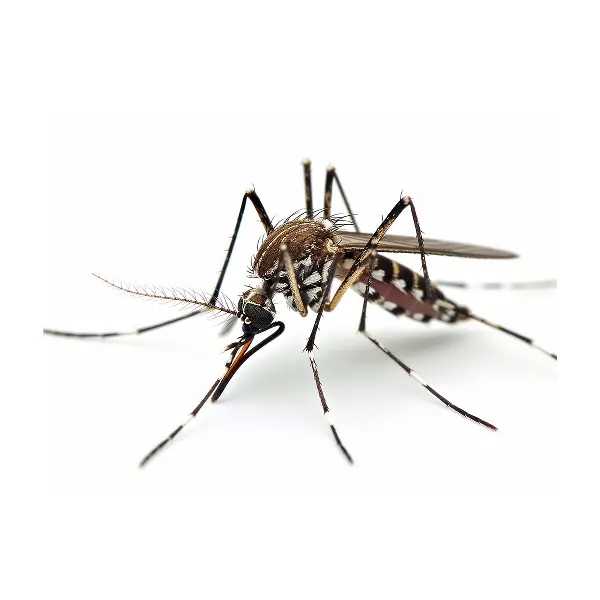
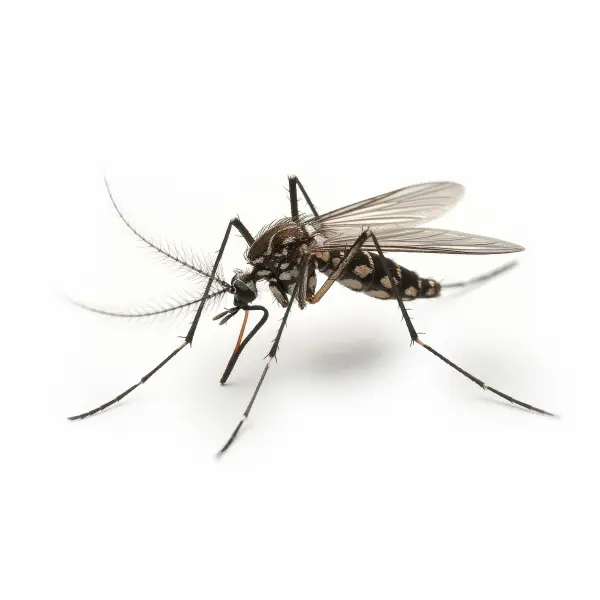
The Asian tiger mosquito has very distinctive markings and is easily identifiable by even a casual observer. It will bite as often during broad daylight as near dawn or dusk. This mosquito is a “container breeder,” which will deposit its eggs in almost any type of natural or artificial container that will hold water.
The Asian tiger mosquito has a limited flight range and is most often encountered near its breeding habitat. This mosquito can transmit dangerous mosquito-borne diseases such as dengue fever, eastern equine encephalitis, and dog heartworm. It is also a potential vector of St. Louis and LaCrosse encephalitis viruses.
Biology And Behavior
- Adult females are approximately ¼ of an inch in length.
- Both adult males and females are covered with shiny black scales with silver or white bands on their legs and dotted lines on their abdomens.
- Its most distinctive characteristic is a striking band of silver or white scales down its thorax.
- You can find mosquito larvae in artificial containers such as tires, flowerpots, buckets, trash receptacles, ornamental ponds, birdbaths, pet watering dishes, clogged guttering, and abandoned cups and cans.
- Mosquito larval development may also occur in natural containers such as tree holes and leaf axils.
- Asian tiger mosquitoes may share their breeding habitats with other mosquito species.
- In temperate climates like ours, this mosquito overwinters in the egg stage.
Asian Tiger Mosquito Prevention Tips
- Drain areas of standing water or treat with an appropriately labeled mosquito larvacide.
- Keep grass cut short and eliminate dense vegetation, which serves as resting sites for adult mosquitoes.
- Install or repair screen doors and windows to keep mosquitoes outdoors.
- Use an insect repellent containing DEET (N, N-Diethyl-meta-toluamide) on exposed skin and thin clothing when outside.
- When the weather permits, wear long-sleeved shirts, long pants, and socks outdoors.
- Check with your local government to see if there is a community mosquito abatement program in your area.
- Organize neighborhood cleanup days to pick up abandoned containers in parks and alleyways and clean up vacant lots.
Action’s Mosquito Control Services
- Residential Mosquito Control Treatments
- Commercial Mosquito Abatement Services
- Community-Wide Abatement Programs
- One-Time Mosquito Treatments for Events
FAQs
When bitten by an Asian tiger mosquito, most people experience an itchy, red bump that may swell slightly. The bite typically appears within minutes and can remain irritated for several days. Some individuals may have more severe reactions, including larger areas of swelling, soreness, and redness.
To relieve normal bite symptoms, clean the area with soap and water, apply a cold compress, and use over-the-counter anti-itch creams or antihistamines as needed.
If you experience symptoms like high fever, severe headache, body aches, joint pain, rash, or nausea after being bitten, seek medical attention immediately.
Yes, Asian tiger mosquitoes are well-established throughout much of the United States, including Indiana, Illinois, and Kentucky. Originally native to Southeast Asia, this invasive species was first detected in the U.S. in Texas in the mid 1980s, likely arriving through shipments of used tires. Since then, they have spread rapidly across the eastern and southern states due to their adaptability and ability to thrive in both urban and suburban environments.
No, not all Asian tiger mosquitoes carry dengue or other diseases. A mosquito can only transmit a virus if it has previously fed on an infected person or animal. In the United States, locally transmitted dengue cases are relatively rare, primarily occurring in southern states like Florida and Texas, where infected travelers may introduce the virus.
Several strategies can help keep Asian tiger mosquitoes away from your home and yard.
- Eliminating standing water is the most effective approach, as this removes potential breeding sites. Check for water accumulation in flower pots, gutters, birdbaths, pet dishes, and old tires weekly.
- Keep your lawn well-maintained by cutting grass short and trimming dense vegetation where adult mosquitoes rest during the day.
- Use EPA-registered insect repellents containing DEET, picaridin, or IR3535 (Ethyl butylacetylaminopropionate) when spending time outdoors.
- Installing or repairing window and door screens helps keep mosquitoes out of your home.
- For comprehensive protection, call the licensed exterminators at Action Pest Control.