Tired of constantly battling pesky mosquitoes around your home? The pest control professionals at Action Pest Control know how frustrating these insects can be and are ready to help. Learning how to spot mosquito larvae early is one of the most effective ways to stop an infestation before it grows. Once you know what to look for, you can take quick action to reduce breeding areas in your yard. This is especially important for homeowners in Indiana, Illinois, and Kentucky, where warm weather supports mosquito activity.
Effective Ways to Kill Mosquito Larvae
The constant buzzing and itching caused by mosquitoes can quickly wear you down. What many people do not realize is that mosquitoes bite when they are ready to reproduce, leading to a new wave of pests. Each bite can mean another generation developing nearby.
Preventing mosquitoes from fully developing is key to long-term control. Here are some effective methods for killing mosquito eggs and larvae.
- Dish Soap or Shampoo: Mix a small amount of liquid dish soap or shampoo into a gallon of standing water and gently stir. The soap breaks the surface tension, causing mosquito eggs and larvae to suffocate.
- Oil: Olive oil or vegetable oil can quickly kill mosquito eggs and larvae by coating the water’s surface. Avoid using oil in ponds or birdbaths, as it can harm fish, birds, and other wildlife.
- Vinegar: For small water sources such as birdbaths, add apple cider vinegar at roughly 15 percent of the total water volume. This can interfere with larval development, though vinegar is less effective against mosquito eggs.
Not only are these methods effective at killing mosquito larvae, but they also use items you likely already have at home. Once mosquito larvae are identified on your property, we strongly recommend removing them right away.
Where Mosquito Larvae Are Commonly Found
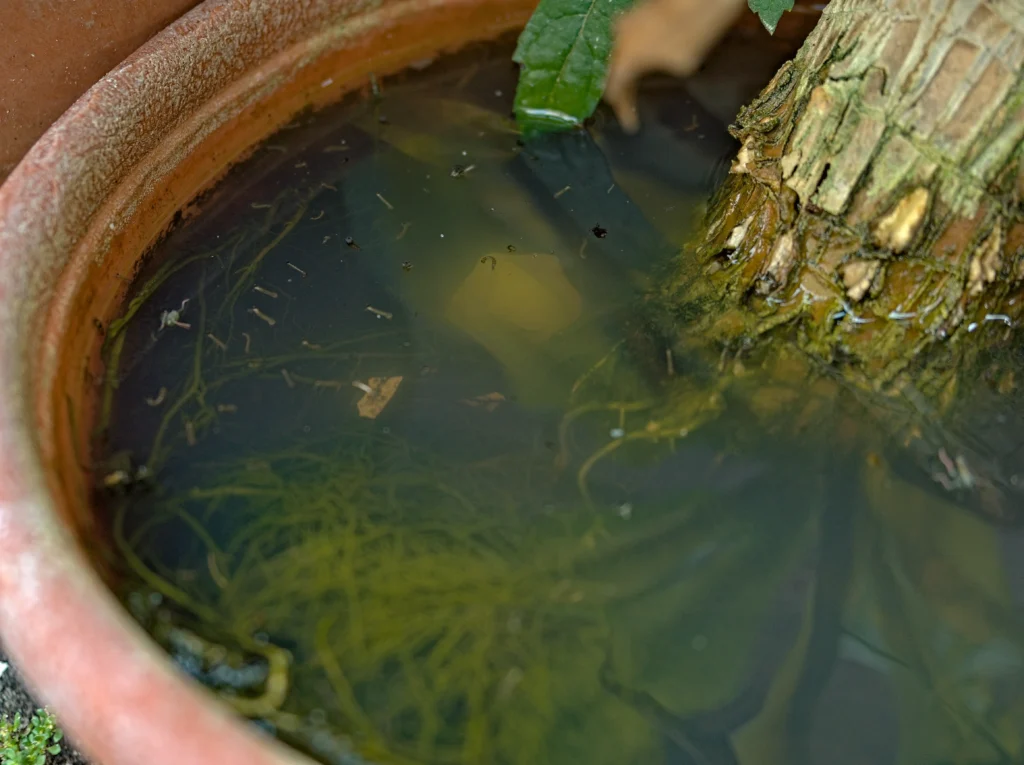
Standing water is where mosquito larvae thrive throughout their early life cycle. Even small amounts of water can support larval development. Common areas where mosquitoes breed include:
- Stagnant Ponds
- Marshes
- Ditches
- Puddles
- Birdbaths
- Flower Pots
- Clogged Gutters
Mosquito larvae can develop in nearly any still water they find. Taking time to identify and remove standing water is key to preventing breeding and keeping mosquito populations under control.
Why Are Mosquito Larvae Found in Standing Water?
Water is essential to mosquito larvae because it provides the environment needed for reproduction. Female mosquitoes deposit their eggs in standing water, where development begins almost immediately. These conditions support the early stages of mosquito growth.
The eggs soon hatch into larvae that live entirely in the water. They feed on organic debris and continue developing through multiple stages before becoming pupae. Adult mosquitoes eventually emerge from the water once this process is complete.
This is why controlling standing water is critical for mosquito control. Eliminating these breeding sites helps break the life cycle and limits future mosquito populations.
How Can You Identify Mosquito Larvae?
“Wigglers” is the nickname for mosquito larvae, and it’s easy to see why. They move by wiggling from side to side and resemble tiny worms. Their color ranges from light beige to brown, and they live exclusively in water, requiring very little of it to survive. Because they are so small, spotting them can be tricky.
People sometimes mistake these larvae for tadpoles, especially at first glance. Tadpoles are generally bigger and have a smooth body with a tail, while mosquito larvae have multiple segments. Paying attention to these features helps distinguish the two.
Can You Kill Mosquito Larvae by Emptying Their Water Source?
Yes, if you have a wheelbarrow, birdbath, or any container with standing water and notice mosquito larvae, emptying the water onto dry ground will kill them since they cannot survive without water. This method works quickly and safely for small water sources. Be careful, though, because mosquito larvae need very little water to survive, so make sure the ground is completely dry before discarding the water.
How Fast Do Mosquito Larvae Develop?
After a female mosquito lays her eggs, it usually takes 24 to 48 hours for the larvae to hatch. During this time, the eggs are extremely vulnerable and can be disrupted by removing standing water. Once hatched, the larvae live in water and grow rapidly, taking about one to two weeks to develop into adult mosquitoes. This short timeline is why early intervention is so important for mosquito control.
Professional mosquito exterminators can identify hidden breeding sites and apply treatments to stop larvae from becoming biting adults.
Stop Mosquitoes Before They Bite! Call Action Pest Control
If mosquito larvae seem impossible to get rid of, it may be time to call in local mosquito control professionals. In Indiana, Illinois, and Kentucky, homeowners rely on experts to identify and treat hidden breeding sites. The specialists at Action Pest Control focus on eliminating every potential mosquito hotspot. Our goal is simple: prevent mosquitoes from spreading and stop eggs and larvae before they grow.
Want to take back your yard from mosquitoes? Call Action Pest Control today and let our experts handle the pests!