Birds can be beautiful, but they can also cause serious problems when they nest and roost in our homes and businesses. Common birds in our region, including sparrows, pigeons, grackles, and crows, are highly destructive and have the ability to spread pathogens and bacteria that cause serious health problems for people. The bottom line is that allowing a bird infestation around your property is never a good idea, and the sooner you identify the problem, the better off you’ll be.
So, how do you identify a bird infestation? Let’s start with the most common signs.
Top 5 Signs of a Bird Infestation
To protect your property, look for these specific indicators that a visiting bird has decided to make your home their own.
1. Accumulation of Droppings
While a few spots are normal, “concentrated” means you see buildup on ledges, signage, or sidewalks directly beneath rooflines. This isn’t just an eyesore; the uric acid in bird droppings is corrosive enough to eat through paint, roofing materials, and even light masonry.
Is a bird infestation bad for my health? Yes, absolutely. The droppings could potentially be teeming with germs and bacteria. Never touch it without proper safety equipment.
2. Blocked Gutters, Vents, Eaves, and Drainage
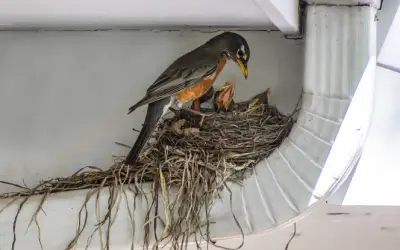
Birds love the “valley” of a roof or the interior of a gutter for nesting. If you notice water overflowing from your gutters during light rain or see straw and twigs protruding from downspouts, you likely have a nesting colony. Blocked vents can also be a dangerous fire hazard.
- Common Culprits: Sparrows, Starlings, Finches.
What’s blocking my gutter, vent, or drain? Believe it or not, it’s most likely a nest. Many types of birds value these closed spaces for their relative safety from predators.
3. Guarding Behavior
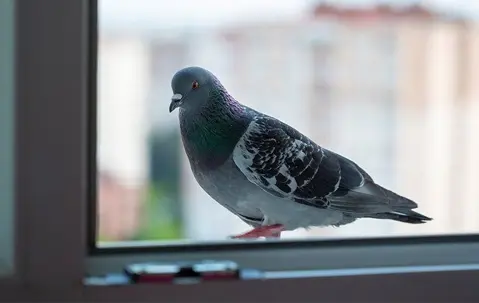
Pest birds are creatures of habit. If you see birds consistently sitting on the very edge of your roof, chimney, or window ledges looking outward, they are likely “guarding” a nearby nesting site or waiting for a safe moment to return to their young.
- Common Culprits: Pigeons, Crows, Grackles.
Can you get sick from birds nesting on your roof? Yes, it’s possible. Birds nesting on your roof are territorial, noisy, and their droppings and nesting material are highly contaminated. Coming in contact with these can easily make a person sick.
4. Excessive Bird Sounds
This is more than just hearing a bird outside. An infestation sign is hearing “interior” sounds—scratching behind drywall, chirping inside attic spaces, or a constant “cooing” that echoes through ventilation shafts and HVAC ducts.
- Common Culprits: Pigeons (cooing), Starlings (mimicry/whistling), Chimney Swifts (chattering).
Why can I hear birds cooing at all hours? Birds are much noisier than many people realize. If they establish a nest in your home, under your roof, or even in a tree outside a window, they can be loud enough to keep you awake.
5. Damage or Destruction
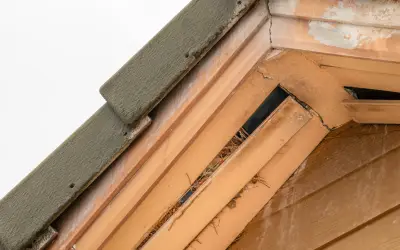
In an attempt to widen entry points or gather nesting insulation, birds will actively destroy property. This looks like shredded roof flashing, holes in wooden siding, or insulation being pulled out of soffit vents.
- Common Culprits: Woodpeckers, Sparrows, Starlings.
How do I sanitize an area after a bird infestation? We recommend calling a professional bird control company – they are trained to clean up afterward, and know how to do it safely.
If you clean up after a bird infestation, always wear appropriate safety equipment, including gloves and a mask. Anyone not wearing a mask should stay out of the area until the cleaning is finished. Remove the solid materials first, then sanitize with a non-bleach-based cleaner. Don’t use bleach as it can combine with the ammonia in their urine.
More Signs of a Bird Infestation
While the top five are the most immediate “red flags,” these secondary signs often point to a long-term problem that has already begun to affect the local ecosystem of your building:
- Secondary Pest Outbreaks: Bird nests are breeding grounds for “ectoparasites.” If you suddenly see bird mites, carpet beetles, or fleas inside your home or office, they may be migrating from a nest in the attic.
- Foul, Ammonia-Like Odors: A large accumulation of droppings and nesting material creates a distinct, pungent smell that is often mistaken for a gas leak or rotting garbage.
- Debris in Stock and Machinery: For businesses, finding feathers, nesting materials, or droppings on warehouse shelving or inside heavy machinery is a sign that birds are flying freely within the interior structure.
- Aggressive Behavior: During nesting season, certain birds will “dive-bomb” people who walk too close to their territory. If a specific area of your property has become a “no-go zone” due to bird aggression, the infestation is well-established.
Bird or Bat? – How to Tell Which One You Have
Birds and bats in homes have many of the same hallmarks and cause similar kinds of damage and destruction. Here’s how to tell based on a few different factors:
| Feature | Birds | Bats |
| Droppings | Splattered, wet, and have white spots. | Dry, dark “pellets” that glitter when crushed. |
| Active Hours | Daytime (sunrise is the loudest). | Nighttime (dusk and dawn activity). |
| Entry Point | Look for straw and twigs poking out. | Look for oily, brown stains around the gap. |
| Noise | Chirping, squawking, and flapping. | High-pitched “ticking” and scratching. |
*Note that, like many birds, bats are protected species in our area, meaning there are certain legally required ways to handle them. That’s one of many reasons you should always leave bat control to the experts.
What Should You Do If You Notice These Signs?
If you recognize any of these signs on your property, we recommend calling a professional immediately. Birds can damage your property quickly, and removing them is a job best left for the experts. It’s simply not a DIY project; many birds are protected species, and mishandling them can result in significant legal fines.
Who Should I Call If I Have a Bird Infestation?
Contact Action Pest Control. We provide humane, effective bird deterrent solutions that make your property unwelcome to these pests. We have been successfully serving business owners in Illinois for over two decades.
Contact us today for more information on our residential and commercial bird control services in Indiana, Illinois and Kentucky and let us help you protect your property and everyone on it.